
Search Alabama Probate Court Records
Each of Alabama's 67 counties has a Judge of Probate who keeps court records. These records include estate files, wills, and guardianship cases. You'll also find conservatorship appointments, adoption records, name changes, and property transfers. The probate courts handle mental health cases too. They keep marriage certificates filed after August 2019. Under Alabama Code § 36-12-40, records are public. All persons can inspect them. Some records are restricted by law. Each county runs its own probate court system. Online access varies from county to county.
Alabama Probate Courts Quick Facts
How to Access Alabama Probate Court Records
County Probate Courts (Primary Source)
Alabama runs a spread-out probate court system. Each county keeps its own records. The Judge of Probate in each county is elected. They serve a six-year term. Under Alabama Code § 12-13-1, probate courts have broad powers. They grant letters testamentary and administration. They probate wills and settle estates. They name guardians and conservators. They also handle adoptions and name changes, plus other matters the law specifies.
You must check the county where the deceased lived. Or check where the property was. There is no single statewide search portal. Alabama does not have one database for all probate records. Each county has its own online systems. Fee schedules differ by county. The level of digitization varies too.
Online Search Options
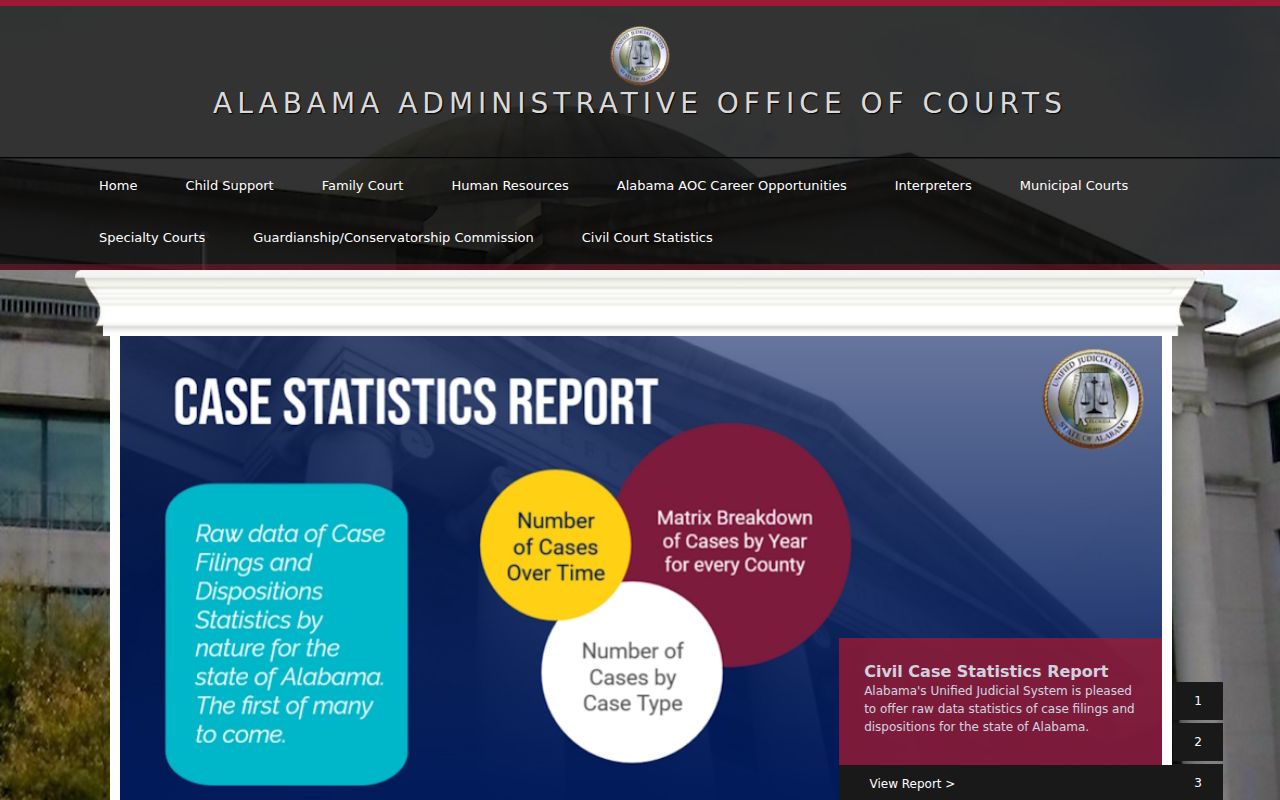
Many Alabama counties now offer online probate record searches. County-specific websites host these searches. Common platforms include Landmark WEB, which Jefferson, Mobile, and other counties use. Some counties maintain their own databases. Online systems usually provide free index searching. Fees are charged only for viewing or downloading document images. Urban counties like Jefferson, Mobile, Madison, Baldwin, and Shelby offer more thorough online access. They have searchable databases. Some document images date back to the 1800s.
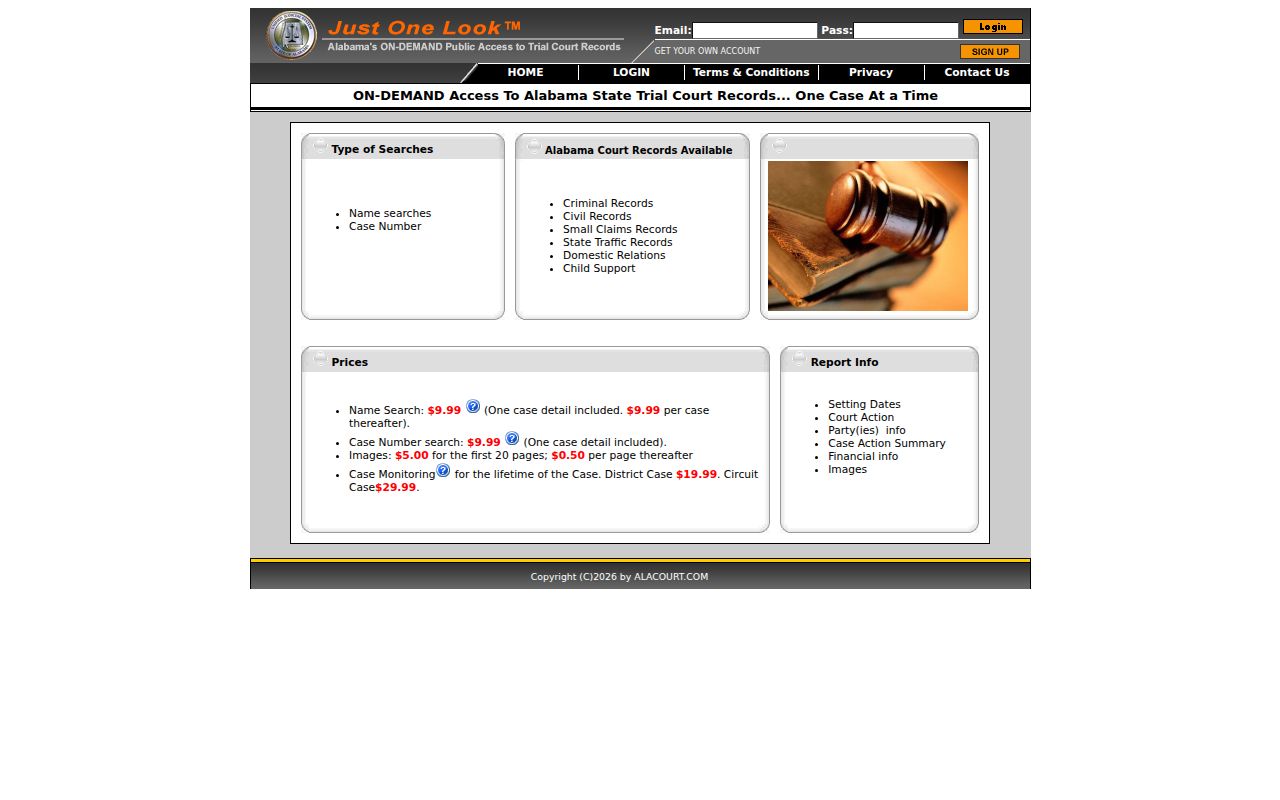
The Alacourt Access system at pa.alacourt.com provides access to Alabama trial court records. It focuses on civil, domestic, criminal, and traffic cases. Probate court records in Alacourt Access are limited. County-specific probate databases have more. For full estate administration records, wills, and property transfers, county probate court websites are better.
In-Person Research
Visiting county probate courthouses gives you access to complete historical archives. This includes records that have not been digitized yet. Most Alabama probate courts are open Monday through Friday. Hours are 8:00 AM to 4:30 PM or 5:00 PM. You can review records on-site. You can request copies from probate office staff. In-person research works well for older estate files. It's also good for handwritten wills and documents not available online. Bring valid photo ID. Also bring any known details like names, dates, or case numbers.
Mail Requests
Probate records can be requested by mail. Send your request to the county probate court. Written requests should include your contact information. Also include the deceased person's name and date of death or probate. Add the case number if you know it. Specify if you need certified or uncertified copies. You must include payment based on the county's fee schedule. Processing times vary by county workload. Most simple requests take one to three weeks.
Fees and Costs
Alabama Code § 12-19-90 sets a fee schedule for probate court services. For new estate filings, probating a will with up to five pages costs $45.00. This includes three certified copies of letters testamentary. It also covers final settlement processing for settlements up to ten pages. Extra pages cost $3.00 per page. Letters of administration follow the same fee structure.
Copy fees for existing probate records vary by county. Typical charges range from $0.10 to $2.00 per page for uncertified copies. Certified copies need an extra certification fee. This fee ranges from $2.00 to $5.00 per document. It depends on the county. Online document viewing through county systems usually costs $0.10 to $0.50 per page. In-person copies made by staff cost $1.00 to $2.00 per page. Many counties offer free index searching. Fees apply only for document images.
County fees vary widely. Jefferson County charges $1.00 per page with $2.00 certification. Mobile County charges $0.10 per page for online access. Coffee County charges $2.00 per page for downloads. Montgomery County charges $1.50 per page with $5.00 certification. The statute does not repeal local laws about fees for judges of probate. This allows variation at the county level.
Types of Records Available
Estate Administration Records
Estate files contain many documents. You'll find petitions for probate and wills. For estates with wills, there are letters testamentary. For estates without wills, there are letters of administration. Files also include estate inventories, creditor claims, accountings, and final settlement documents. Under Alabama Code Title 43, Chapter 2, personal representatives must file a complete inventory. They have two months from appointment. They must provide notice to creditors. Claims against estates must be presented within six months after grant of letters. Or within five months from first publication of notice. See Alabama Code § 43-2-350.
Wills and Testamentary Documents
Wills admitted to probate become part of the permanent public record. Alabama law allows up to five years to file a will. You count from the testator's death. Once admitted to probate, the will can be accessed by any member of the public. Will contests can be started in circuit court. You have six months from admission to probate. See Alabama Code § 43-8-199.
Guardianship and Conservatorship Files
Alabama Code Title 26, Chapter 2A sets up the Alabama Uniform Guardianship and Protective Proceedings Act. It took effect in January 1988. Guardian appointments address the personal welfare and health care decisions for incapacitated persons or minors. Conservator appointments manage property and business affairs. This happens when an incapacitated person cannot do so and has property that needs management. Guardianship and conservatorship files include petition documents. They also have court orders, annual accountings, and inventories.
Adoption Records (Sealed)
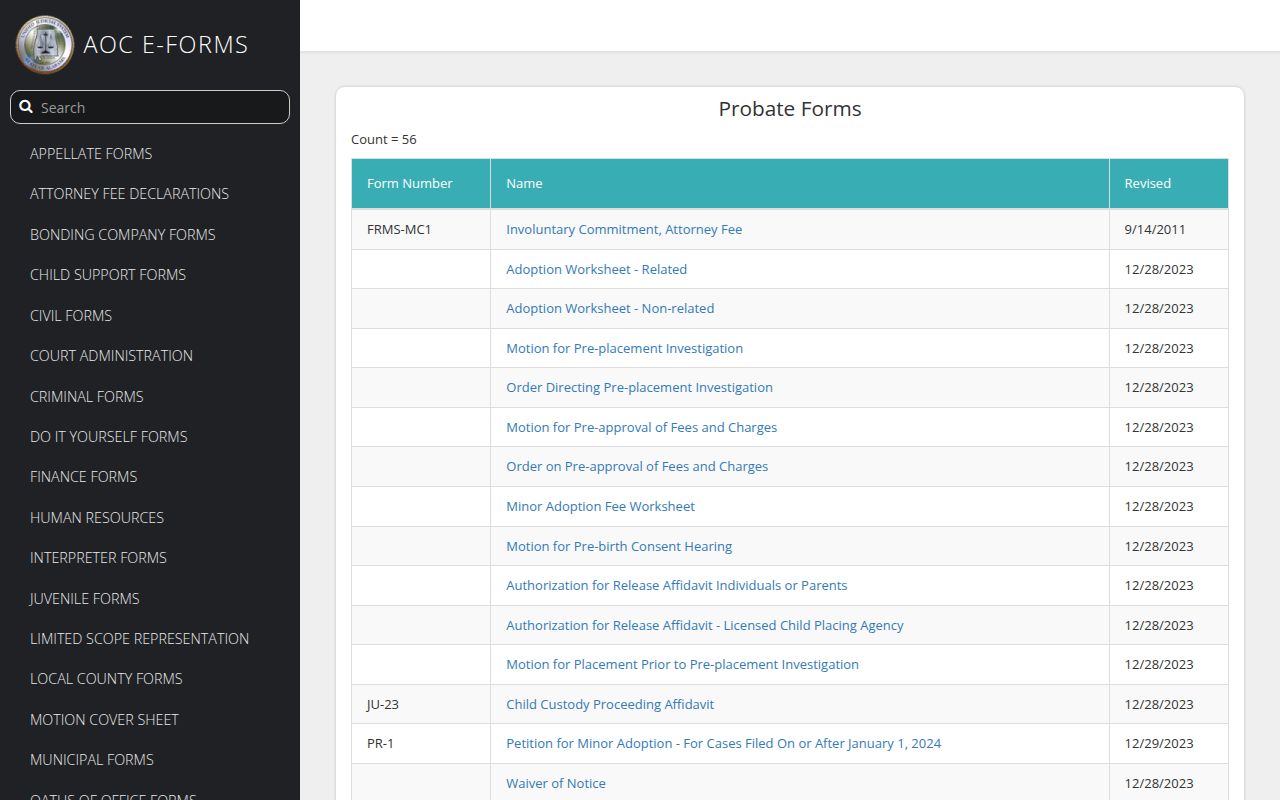
Adoption records are sealed under Alabama Code Title 26, Chapter 10A. After the final decree of adoption is entered, all documents about the adoption are sealed. Identifying information cannot be obtained except under limited circumstances. Before a final adoption decree, only certain people have access. These include the petitioner, the petitioner's attorney, the preplacement investigator, and any attorney appointed for the minor. Others need a court order showing good cause. Adoptees who reach age 19 may petition the probate court for disclosure of identifying information. But this information will not be released without birth parent consent. The court may release it if it is in the best interest after weighing all parties' interests.
Name Change Records
Name change petitions are filed in the probate court of the county where the petitioner lives. The verified petition process needs notice to interested parties. It also needs a court hearing. Under Alabama Code § 26-11-3, name changes for children by petition of the father need notice to the mother and to the child. The court must find compliance with notice requirements. It must find good and sufficient reason for the change. It must also find that the change is in line with the public interest.
Real Property Records
Probate courts in Alabama serve as the recording office for real property deeds, mortgages, liens, and plats. Land records are kept by the Recording Department within each probate office. These records create the chain of title for property in the county. Property transfers related to estate administration are recorded in the probate court where the property is. Recording fees are usually $1.00 per $1,000 of property value for deeds.
Marriage Certificates
Since August 29, 2019, Alabama got rid of marriage licenses. They replaced them with marriage certificates recorded by probate judges. Marriage certificates are available from the county probate court where they were recorded. You can also get them from the Alabama Department of Public Health. These records are restricted for the first 25 years. Only family members and legal representatives can access them during this time.
Related Record Sources
Alabama Department of Public Health - Vital Records
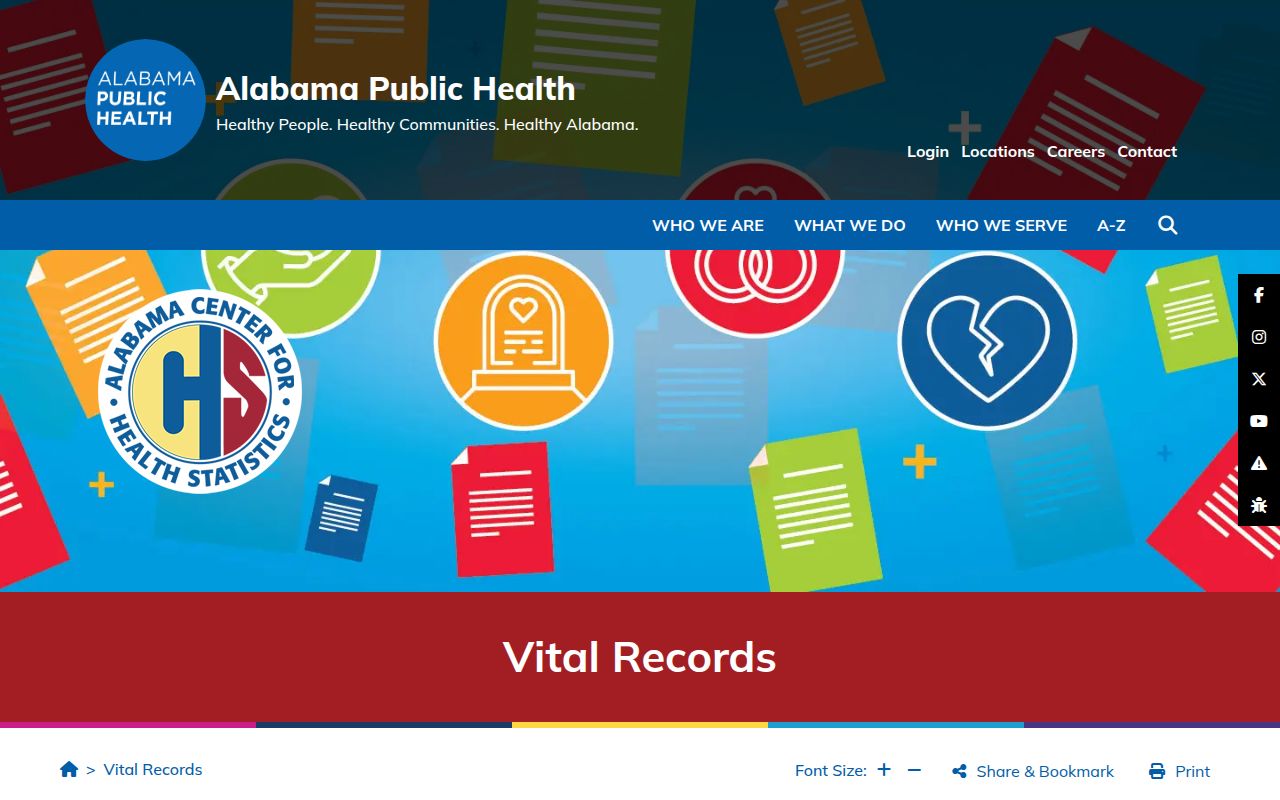
Death certificates are needed for estate administration. The Alabama Department of Public Health Center for Health Statistics keeps death records from August 1936 to present. Older death records from January 1, 1908 through August 1936 are held by county probate courts. January 1, 1908 was when mandatory statewide death registration began. Death records less than 25 years old are restricted. Only immediate family members, legal representatives, and estate administrators can get them. Search fees are $15.00. This includes one certified copy.
Circuit Court Records
Circuit courts have concurrent jurisdiction with probate courts in some matters. Any heir, beneficiary, or personal representative can move estate administration from probate court to circuit court. Circuit courts have exclusive jurisdiction over trust proceedings. The exception is five counties where probate courts have equity jurisdiction. These are Jefferson, Mobile, Shelby (if judge is licensed attorney), Pickens, and Houston. Will contests and contested guardianships may be heard in circuit court. The Alacourt Access system provides statewide trial court records. This includes circuit court filings.
Alabama Department of Archives and History
The Alabama Department of Archives and History was founded in 1901. It was the first state department of archives and history in the United States. ADAH keeps county probate records on microfilm. This includes deeds, wills, and estate files from 1809 forward. The Local Government Records Microfilm Database is searchable online at legacy.archives.alabama.gov/localrecords/search.cfm. To view the actual microfilm, you must visit the ADAH research room in Montgomery.
Historical Collections
FamilySearch offers free access to Alabama Probate Records from 1809 to 1985. The collection covers many counties. These include Autauga, Baldwin, Bibb, Blount, Bullock, Calhoun, Cherokee, Chilton, Clay, Cleburne, Elmore, Etowah, Geneva, Greene, Hale, Lamar, Lowndes, Madison, Marion, Marshall, Mobile, Monroe, Morgan, Perry, Pike, Russell, and others. These digitized collections include case files, wills, bonds, dower records, settlement records, and orphans' records. Records are browsable images. They are generally not indexed. Coverage spans from county creation through the 1920s to 1980s. It depends on the county.
Legal Framework
Public Access Statute
Under Alabama Code § 36-12-40, records of the office of the probate judge are public writings. They are free for examination by all persons. Every Alabama resident has a right to inspect and take a copy of any public record. The exception is where the law says otherwise. Senate Bill 270 in 2024 amended this section. It made clear that public officers are not obligated to respond to requests that are vague, ambiguous, overly broad, or unreasonable in scope.
Privacy and Confidentiality Rules
Effective January 1, 2025, the Alabama Supreme Court issued full Rules of Court-Record Privacy and Confidentiality. These rules apply to all Alabama courts including probate courts. They set up 96 categories of privileged or confidential information. These are exempt from public access. Records designated as privileged or confidential under federal or state law are exempt. Court rule or other legal authority can also exempt them. Confidential information includes social security numbers and tax identification numbers. It also includes financial and medical account numbers, names of minor children who are crime victims, and victim information.
Probate Court Jurisdiction
Alabama Code § 12-13-1 sets up the general jurisdiction of probate courts. Probate courts have original and general jurisdiction over many matters. These include the granting of letters testamentary and administration. They also include probate of wills, settlement of decedent estates, appointment and removal of guardians and conservators, involuntary mental health commitments, adoptions, name changes, and partition of land. Alabama Code Title 43, Chapter 8 defines the Alabama Probate Code. It provides full provisions governing probate matters.
Small Estates Procedure
Alabama Code § 43-2-692 is part of the Alabama Small Estates Act. The act passed in 1979. It was revised in 2024. The code provides a summary distribution method for certain estates. This applies when the value of the deceased person's personal property does not exceed a threshold amount. The threshold is adjusted from time to time based on the Consumer Price Index. This procedure allows distribution to a surviving spouse or appropriate distributees. It avoids full probate administration.
Estate Administration Procedures
Alabama Code Title 43, Chapter 2 governs administration of estates. Alabama Code § 43-2-42 sets the order for grant of administration of an intestate's estate. Preference is given to the surviving spouse. Next comes the next of kin, then the largest creditor, or others as appointed by the probate judge. When no executor is named in a will or named executors fail to apply within 30 days, Alabama Code § 43-2-27 comes into play. Letters of administration go to the residuary legatee, principal legatee, or others in the same order as intestacy cases.
Practical Tips for Searching Records
Determine the Correct County
Probate records are filed in the county where the deceased person lived at the time of death. Or where real property was. If unsure of the county, check the death certificate. It lists county of death and residence. Death certificates can be obtained from the Alabama Department of Public Health. For deaths prior to August 1936, get them from the county probate court.
Gather Essential Information
Before searching, collect the deceased person's full legal name. Also get any alternate spellings or names used. Get the date of death or approximate year. You need the county of residence. Also get names of potential heirs or family members. More detailed information leads to faster and more accurate search results.
Check Online Systems First
Most Alabama counties offer free online searching of probate record indexes. Only fees for viewing or downloading document images apply. Major urban counties like Jefferson, Mobile, Madison, Baldwin, and Shelby provide searchable databases. They have document images too. Rural counties may have limited online access. Some have no online access at all. They need phone calls, mail requests, or in-person visits.
Understand Privacy Restrictions
Not all probate records are public. Adoption papers and proceedings are sealed for good after final decree. Juvenile records are confidential. So are mental health commitment records, abuse and neglect records, and certain financial and medical information. The 2025 privacy rules protect these. If denied access to records, ask court staff to explain why. They must cite the legal basis for confidentiality.
Request Certified Copies When Needed
Certified copies include an official seal and signature from the probate judge or clerk. They are needed for legal proceedings, financial institutions, and property transfers. Uncertified copies work fine for research and general information. Always specify which type you need when requesting records.
Legal Assistance Resources
Alabama State Bar
The Alabama State Bar runs a Lawyer Referral Service. It helps the public find an attorney. Participating attorneys charge no more than $50 for an initial 30-minute consultation. Contact info is available at alabar.org. Or call 334-269-1515.
Legal Services Alabama
Legal Services Alabama is an independent nonprofit. It provides free civil legal aid to qualifying low-income families across all 67 Alabama counties. LSA operates from eight offices. These are in Anniston, Birmingham, Dothan, Huntsville, Mobile, Montgomery, Selma, and Tuscaloosa. Eligible individuals can apply for free legal aid. Call 866-456-4995 or submit an online application.
Alabama Legal Help
AlabamaLegalHelp.org is operated by Legal Services Alabama and the Alabama Access to Justice Commission. The site contains information and self-help forms about family law, public benefits, housing, consumer issues, health law, elder law, immigration, and guardianships. The website provides free access to legal information. It also has downloadable forms.
Volunteer Lawyers Programs
More than 3,000 Alabama lawyers give free legal services to low-income citizens. They work through five volunteer lawyers programs statewide. Volunteer Lawyers Birmingham can be reached at 205-250-5198. Madison County Volunteer Lawyers Program is at 256-539-2275.
Alabama Department of Senior Services
The Alabama Legal Assistance Program for Seniors provides a statewide system of legal professionals. They assist older adults with personal legal issues. This includes wills, estates, and guardianships. Contact the Alabama AgeLine at 1-800-AGE-LINE (1-800-243-5463) for help.
Browse by Location
Search by County
Alabama probate court records are kept at the county level. Pick a county to view probate court contact information. You'll also see online search options, fee schedules, and local resources.
View All 67 Alabama Counties →
Search by City
Probate records for city residents are filed in the county probate court serving that area. Major Alabama cities are listed below. Each has links to local probate court information.
Start Your Search
Use the search tool to access probate court record information from across Alabama.