
Autauga County Probate Court Records
All probate court records for Autauga County are kept at the probate court office in Prattville. This includes estate administration files, probated wills, and guardianship proceedings. You'll also find conservatorship orders, sealed adoption records, name change decrees, and property transfer documents. The probate court has jurisdiction under Alabama Code Title 43 for estate matters. Title 26 covers guardianships and adoptions. Estate proceedings need a petition. You must publish notice to creditors. File inventory within two months. Submit annual or final accountings. Will probate fees are set by Section 12-19-90. It's forty-five dollars for wills of five pages or less. The office processes motor vehicle titles. It registers mobile homes and records deeds and mortgages. The office keeps marriage records since August 2019. It also runs elections. Records are generally open to public inspection. The exception is sealed adoption files and other confidential documents.
Autauga County Quick Facts
How to Access Autauga County Probate Records
Probate Court Office
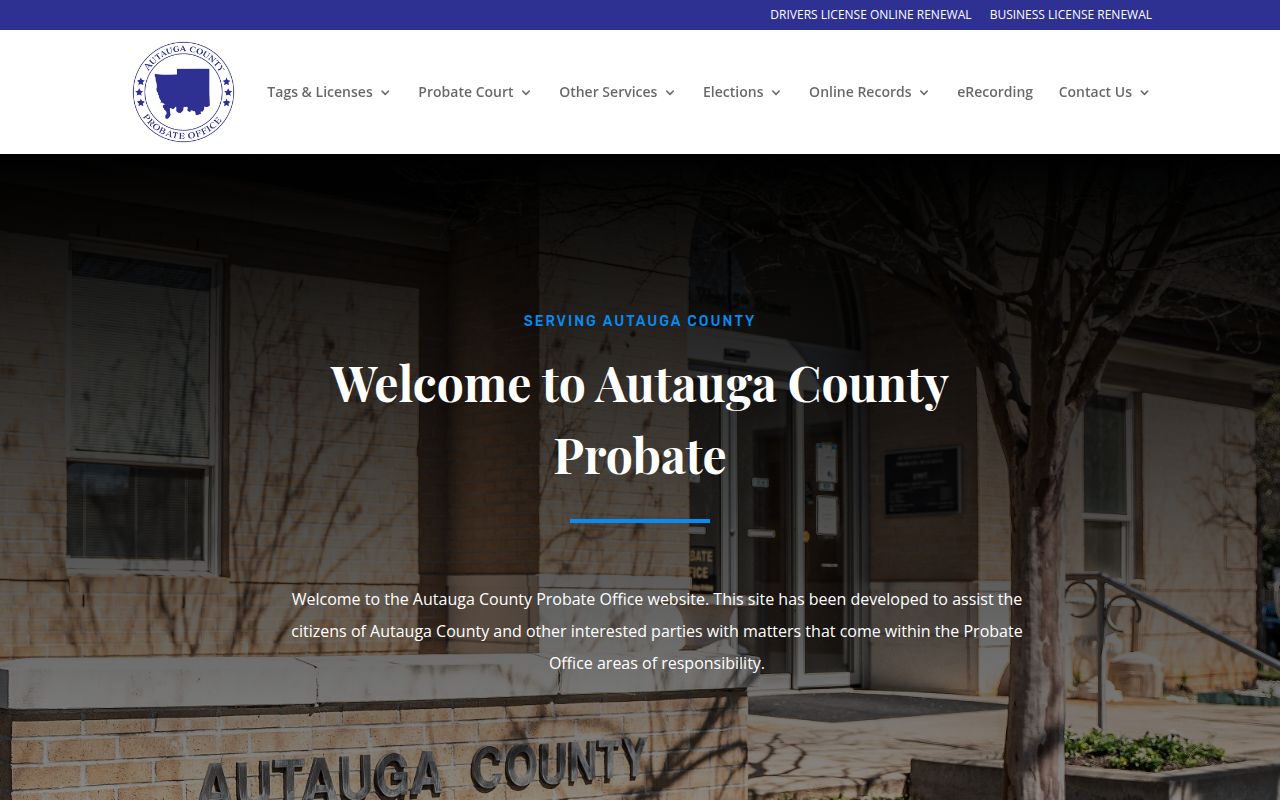
The Autauga County probate court is at the courthouse in Prattville. Under Alabama Code Section 12-13-1, the probate court has original jurisdiction over estate administration. This includes will probate, guardianship and conservatorship proceedings, adoptions, name changes, and related matters. The Judge of Probate is an elected official. They serve a six-year term. The judge is responsible for keeping all court records and proceedings. Estate administration files, probated wills, guardianship case files, and property records are kept at this office. Public access to most probate records is allowed under Alabama Code Section 36-12-40. This law classifies probate court records as public writings. All persons can examine them.
You may visit the probate court during regular business hours. You can search for and review records. Staff can help locate specific case files. Provide names, dates, or case numbers. Bring photo ID. Be ready to give details about the records you seek. Original documents stay in the custody of the probate court. You cannot remove them from the office. Copies can be requested from court staff. Fees apply.
Probate Court Contact Information
Probate Judge: Kimberly G. Kervin
Address: 176 W 5th Street, Prattville, AL 36067
Phone: 334-361-3728
Office Hours: Monday-Friday: 8:00 AM – 12:00 PM, 12:30 PM – 4:30 PM
Online Record Access
Online access to Autauga County probate records may be available. Check for county-maintained databases or third-party platforms. Many Alabama counties now provide web-based search systems. These let users search probate case indexes. You can view document images remotely. Online systems usually offer free index searching. Fees are charged only for viewing or downloading actual documents. The extent of online access varies a lot by county. It depends on digitization efforts and available resources.
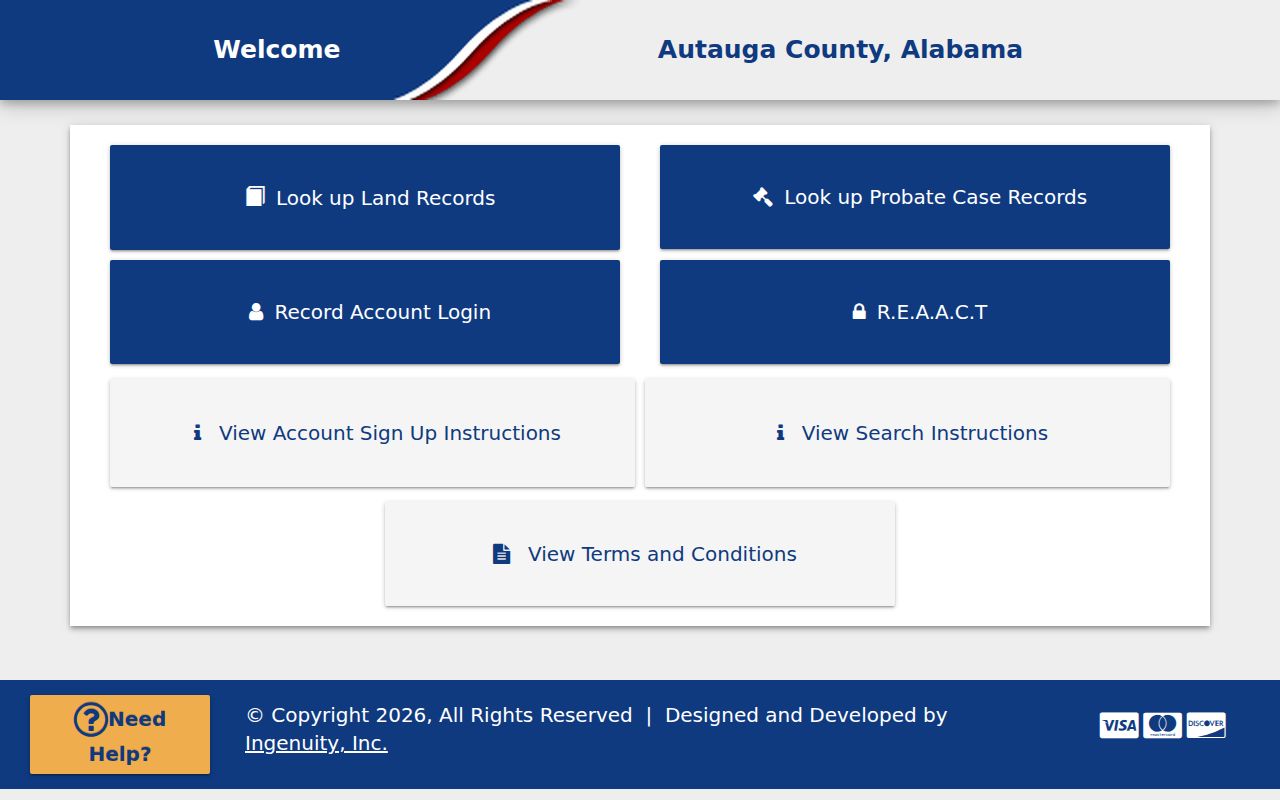
Some counties use commercial platforms like Landmark WEB, Ingenuity, or Syscon Online. These provide public access to probate records. Other counties keep their own custom database systems. You can access these through county websites. Urban counties usually offer more full online access. Some have records dating back to the 1800s. Rural counties may have limited online systems. Some have no remote access at all. Contact the probate office directly. Ask what online services are currently available for Autauga County.
Types of Probate Records in Autauga County
Estate Administration Records
Estate files are the most common type of probate record. When someone dies, their estate must go through the probate court in the county of their residence. The process starts with filing a petition. For wills, file for letters testamentary. For intestate estates, file for letters of administration. Alabama law needs wills to be filed within five years of death. Under Alabama Code Section 43-2-350, creditors have six months from grant of letters. Or five months from first publication. They must file claims against the estate in that time.
A complete estate file contains many documents. The original will or petition for administration. Letters issued by the court. Inventory and appraisement filed within two months per statute. Creditor claims, accountings, receipts and releases, and final settlement documents. Files may also include petitions for sale of property. You might find family allowances and court orders on contested matters. Estate records stay in the probate court archives for good. They do not expire. These files give valuable information about deceased persons. They show property ownership, family relationships, and asset distribution.
Guardianship and Conservatorship Records
The probate court appoints guardians for minors and incapacitated persons. This is under Alabama Code Title 26, Chapter 2A. A guardian manages personal welfare and healthcare decisions. A conservator handles financial affairs and property management. Guardianship proceedings start with a petition. The petition must show the need for appointment. The court must find clear and convincing evidence of incapacity. This is before appointing a guardian for an adult.
Guardianship case files include many documents. The initial petition, medical evidence or certificates, and appointment orders. Bond filings, annual accountings and reports. Court orders approving expenditures or actions. Final discharge orders when the guardianship terminates. Conservators must file detailed annual accountings. These show all financial transactions. These records are public unless sealed by court order. Recent privacy rules may restrict access to certain personal information about incapacitated persons though.
Adoption Records
Probate courts in Alabama have jurisdiction over adoption proceedings. But adoption records are sealed by statute. This happens once the final decree is entered. Under Alabama Code Title 26, Chapter 10A, identifying information from adoption files cannot be disclosed. The exception is by court order. Before a final decree is rendered, only certain people have access to the records. The petitioner, the petitioner's attorney, the preplacement investigator, and any attorney for the minor.
An adoptee who reaches age 19 may petition the probate court. They can ask for disclosure of identifying information about biological parents. The court will not release this information without the consent of the biological parent. The exception is if the court determines disclosure is in the best interest. This is after weighing all factors. Natural parents may consent in writing under oath. This allows disclosure when the adoptee reaches 19. Sealed adoption records are not available for general public inspection.
Name Change Records
Name change petitions are filed in the probate court of the county where the petitioner lives. This is under Alabama Code Title 12, Chapter 13. The process needs filing a verified petition with the probate court. Notice must be given to interested parties. This is required by Alabama Rules of Civil Procedure. For child name changes, notice must be provided to both parents. Unless waived. The court must find compliance with notice requirements. It must find good and sufficient reason for the change. It must also find that the change is in line with the public interest. This is before granting the petition.
Name change files contain the verified petition. Also proof of notice or waivers. Plus the court's order granting or denying the petition. These records are usually public. They may be sealed for specific reasons like domestic violence protection or witness protection programs. Name change records can be useful for genealogical research. They help trace individuals through different surnames.
Fees and Costs
Alabama Code Section 12-19-90 sets a fee schedule for probate court services statewide. The statute sets standard fees for common probate transactions. But it does not repeal local laws that may set different fees for judges of probate. As a result, actual fees charged may vary between counties. The Autauga County probate court follows either the statutory schedule or a local fee schedule. This depends on if one has been adopted.
Standard fees under Section 12-19-90 include:
- uncertified copies: $0.50-$2.00 per page depending on county
- filing petitions: $3.00 per petition or paper filed
- certified copies: $2.00-$5.00 per document plus page fees
- will probate (5 pages or less): $45.00 includes three certified copies of letters
- additional pages: $3.00 per page for wills over 5 pages
Fees are subject to change. Contact the Autauga County probate office at 334-361-3728. Ask for the current full fee schedule. Payment is usually needed at the time of filing. Or when requesting copies. Most probate offices accept cash, checks, and money orders. Some take credit or debit cards. Certified funds may be needed for certain transactions.
Online Access Fees
Counties that provide online record access usually charge fees. These are for viewing or downloading document images. Online fees generally range from $0.10 to $0.50 per page for document viewing. Downloads cost $0.50 to $2.00 per page. Some systems charge a flat fee per document. Page count doesn't matter. Index searching is usually free. Charges happen only when accessing actual documents. Online payment is processed through secure payment gateways. This happens at the time of access.
Legal Framework and Statutes
Probate court procedures and requirements in Autauga County are governed by Alabama state statutes. The primary legal authorities include:
Probate Court Jurisdiction
Alabama Code Section 12-13-1 sets the general jurisdiction of probate courts. The statute grants probate courts original and general jurisdiction over granting letters testamentary and of administration. Also repeal or revocation of such letters. It covers all matters relating to estate administration, guardianships, conservatorships, and other proceedings specified by law.
Estate Administration
Alabama Code Title 43, Chapter 2 contains full provisions governing estate administration. This chapter covers the duties and liabilities of personal representatives. It also covers requirements for inventories and accountings. Plus procedures for selling estate property, payment of debts and claims, and distribution to heirs or beneficiaries. Alabama Code Section 43-2-350 needs claims against estates to be filed within six months. Count from grant of letters. Or five months from first publication of notice to creditors.
Alabama Probate Code
Title 43, Chapter 8 comprises the Alabama Probate Code, which defines the probate court as the court having jurisdiction in matters relating to decedents' estates. The chapter includes provisions on intestate succession, will execution requirements, will contests, and general definitions. Alabama Code Section 43-8-40 and following sections establish how property passes when someone dies without a valid will.
Guardianship and Conservatorship
Alabama Code Title 26, Chapter 2A is the Alabama Uniform Guardianship and Protective Proceedings Act. This act took effect in January 1988 and governs the appointment and duties of guardians and conservators for incapacitated persons and minors. The law distinguishes between guardians who manage personal and healthcare decisions and conservators who handle financial matters and property.
Public Records Access
Alabama Code Section 36-12-40 classifies probate court records as public writings that are free for examination by all persons whether interested or not. Recent amendments in 2024 clarified that public officers are not obligated to respond to requests that are vague, ambiguous, overly broad, or unreasonable in scope. The Alabama Supreme Court issued comprehensive privacy rules effective January 1, 2025, establishing categories of confidential information exempt from public access.
Small Estates
Alabama Code Section 43-2-692 and following sections comprise the Alabama Small Estates Act. This statute provides a simplified procedure for distributing personal property of deceased persons through summary administration when the estate value does not exceed limits adjusted annually for inflation. Small estate procedures allow for faster distribution without full probate administration in qualifying cases.
Autauga County Probate Court Resources
Nearby Counties
For probate court records in adjacent counties, see: